
Root Canal Treatment in Pathirippala
Root canal treatment is a restorative dental procedure designed to remove infection from inside an aching tooth, help relieve pain, and support preserving your natural tooth. At Complete Dental Clinic in Pathirippala, care is planned according to your tooth's condition, using dental X-rays and local anaesthesia to help keep you comfortable.
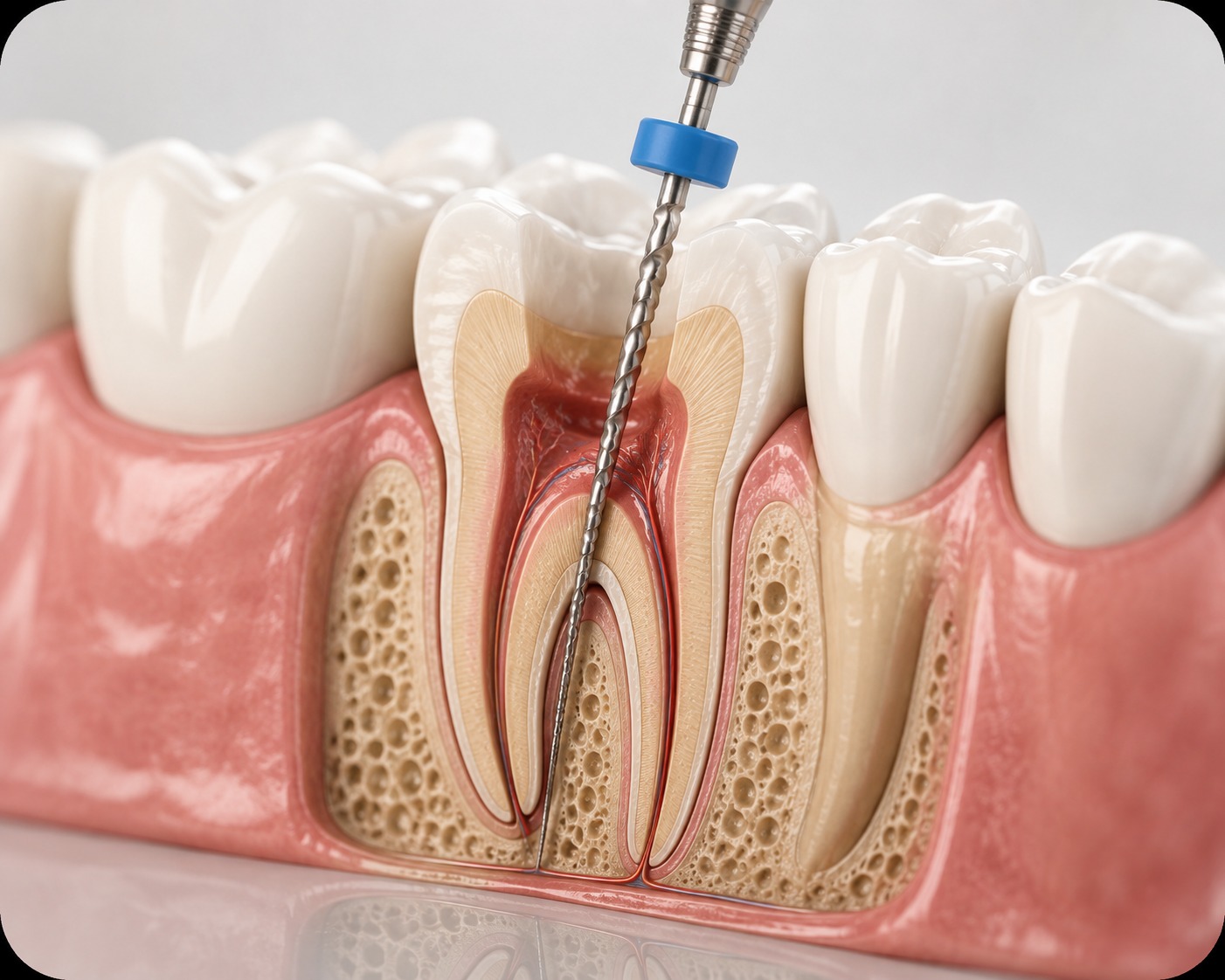
What Is a Root Canal and How Does It Work?
Every natural tooth has hard outer layers—enamel and dentin—that protect a soft inner center called the dental pulp. The pulp contains nerves and blood vessels that help the tooth develop during childhood. Once a tooth is fully mature, it can function normally without this inner pulp because the surrounding gums and bone continue to nourish it.
When deep tooth decay, a crack, or previous extensive dental work allows bacteria into this inner space, the nerve tissue can become irritated or infected. While this often causes persistent toothache or sensitivity, an infection can sometimes develop quietly without noticeable pain.
A root canal treatment is a dental procedure where your dentist clears away the inflamed or infected pulp tissue, cleans and shapes the root channels, and fills them with a biocompatible material called gutta-percha. Sealing the canals helps protect against future bacterial entry, aims to relieve discomfort, and gives the tooth a chance to remain functional.
The Inner Pulp
The soft tissue inside the tooth that can become inflamed or infected when bacteria reach it.
Gentle Cleansing
Cleansing solutions and fine instruments help clear bacteria from the root canals.
Protective Sealing
The cleaned canals are sealed with biocompatible material to protect the tooth and help reduce the risk of reinfection.
Signs You May Need a Root Canal
An infected or inflamed pulp often causes noticeable discomfort, although some teeth may have an infection with little or no early pain. If you notice any of the following signs, a dental checkup is recommended:
Constant Toothache
Throbbing or persistent pain that starts spontaneously or feels more intense when lying down.
Lingering Sensitivity
Sensitivity to hot drinks or cold water that lingers after the temperature source is removed.
Pain When Chewing
Tenderness or pressure when biting down on food or touching the affected tooth.
Gum Swelling or Tenderness
Puffy, tender gum tissue or a small bump on the gums near the aching tooth.
Darkened Tooth Shade
A greyish or darkened tooth shade following past injury or trauma, which may indicate nerve damage.
Deep Decay or Crack
Visible cavities, broken fillings, or cracks that expose inner tooth layers to mouth bacteria.
Clinical note: An infected tooth nerve can sometimes lose vitality gradually without causing acute pain. Regular dental check-ups and diagnostic X-rays help identify hidden infections before more noticeable swelling or discomfort occurs.
Why Preserving Your Natural Tooth Matters
When faced with tooth pain, some patients ask whether extracting the tooth is a simpler solution. Whenever clinically advisable, saving your natural tooth provides important functional and oral health advantages:
Natural Chewing Feel
Natural tooth roots are cushioned by surrounding tissue fibers that provide natural bite feedback when you chew, helping eating feel normal and comfortable.
Reduces Risk of Shifting
Removing a tooth leaves an empty space. In many cases, neighboring or opposing teeth can gradually tilt or drift toward the gap, which may alter your bite over time.
Preserves Natural Smile
Keeping your original tooth helps maintain the natural contour of your gumline and smile without needing artificial tooth replacements.
Conservative Approach
Preserving your natural tooth is generally a more conservative option than an extraction followed by complex replacement procedures such as bridges or implants.
Addressing Pain and Patient Comfort
Root canal treatment often carries an outdated reputation for being uncomfortable. In modern dental practice, local anaesthesia and gentle techniques help keep discomfort to a minimum, making the experience similar to having a standard filling.
The primary goal of a root canal is to relieve the pain caused by an infected nerve. Rather than creating discomfort, the treatment aims to remove the source of the ache so healing can begin.
Before beginning, your dentist administers local anaesthesia to numb the tooth and surrounding area. You may feel light pressure while your dentist works, but local numbing helps minimize discomfort. While individual sensitivity varies and no medical procedure can guarantee zero sensation, our team explains each step and pauses whenever you need a rest.
Local Numbing
Local anaesthesia helps desensitize the tooth so you remain as comfortable as possible during treatment.
Considerate Care
We discuss your concerns, explain each step, and offer pauses whenever you feel the need.
Post-Visit Comfort
Mild tenderness after treatment is common and can usually be managed with simple pain relief advised by your dentist.
What to Expect During Your Treatment
Root canal treatment is completed in structured stages to ensure the tooth is carefully disinfected and restored:
Clinical Check & Dental X-Ray
Your dentist examines the tooth and takes a dental X-ray to evaluate root canal anatomy and the health of the surrounding bone.
Numbing & Isolation
Local anaesthesia is administered for your comfort, and a protective dental sheet is placed around the tooth to keep it dry and clean.
Cleaning & Disinfecting
A small opening is created in the tooth crown to access the canals. Gentle instruments and cleansing solutions help remove infected tissue and bacteria.
Sealing the Canals
Once the canals are clean and dry, they are filled with a biocompatible material (gutta-percha) and sealer to help protect against future bacterial entry.
Restoring the Tooth
A filling seals the top opening. Because back teeth bear heavy chewing pressure, a protective crown is often recommended to strengthen the tooth.
Single-Visit vs. Multiple-Visit Care: What Determines It?
Based on your dentist's clinical examination and assessment, some straightforward cases may be completed in a single visit. However, if a tooth shows active inflammation, persistent drainage, or complex root anatomy, your dentist may recommend two or more visits to allow medication time to soothe the infection before final sealing. The number of appointments is always decided based on your tooth's individual clinical needs.
Protecting Your Tooth After Treatment: Do You Need a Crown?
Patients frequently ask whether every root-treated tooth needs a crown. The recommendation depends on the tooth's location and how much natural structure remains.
Before receiving endodontic care, teeth often have lost tooth volume to decay, fractures, or previous large fillings. Creating an access opening further reduces the remaining tooth structure. Rather than the tooth becoming brittle from moisture loss, it is this loss of physical tooth structure that makes treated back teeth more vulnerable to fracture under chewing pressure.
Back Teeth (Molars & Premolars)
Back teeth bear the brunt of everyday chewing forces. Placing a protective crown or onlay covers the biting surface, distributing chewing pressure more evenly and helping protect against tooth fractures.
Front Teeth (Incisors & Canines)
Front teeth encounter different biting forces than molars. If a front tooth retains sufficient healthy structure, a tooth-colored composite resin filling provided through our general dentistry care may be suitable without needing a full crown.
At Complete Dental Clinic, your dentist examines the remaining tooth structure before recommending the most appropriate restoration.
Post-Treatment Recovery and Aftercare
Recovery following root canal treatment is usually manageable. Following your dentist's specific post-treatment advice supports comfortable healing:
Wait for Numbness to Fade
Avoid chewing or drinking hot liquids until local numbness has completely faded to prevent accidental biting of your lip, cheek, or tongue.
Chew on the Other Side
Chew on the opposite side of your mouth and avoid hard or sticky foods until your final filling or crown is securely placed.
Managing Mild Soreness
Mild tenderness around the tooth for a few days after treatment is common as surrounding tissues heal, though individual recovery times vary. Simple pain relief advised by your dentist can help keep you comfortable.
Maintain Daily Oral Hygiene
Continue gentle brushing and flossing around the tooth. Regular professional teeth cleaning helps support the overall health of your gums and bone.
When to contact us: Contact Complete Dental Clinic if you notice noticeable swelling, discomfort that worsens or persists beyond a few days, an uneven bite when closing your teeth, or if a temporary filling becomes loose.
When a Tooth Can Be Saved—and When It Cannot
While root canal treatment often succeeds in preserving damaged teeth, a clinical examination helps determine whether treatment is suitable or if an alternative is more appropriate for your oral health:
When a Root Canal Is Recommended
- Sufficient sound tooth structure: Adequate healthy enamel and dentin remain above the gumline to support a long-lasting restoration.
- Stable bone support: The surrounding jawbone and periodontal tissues provide adequate stability for the tooth.
- Accessible root channels: The root canals can be safely cleaned, shaped, and sealed.
- Restoration plan: A clear plan is in place to place a protective filling or crown following treatment.
When Extraction May Be Considered
- Severe vertical root fractures: Cracks extending deeply through the root that cannot be sealed and will harbor bacteria.
- Decay deep below the gumline: Cavity breakdown reaching deep beneath the bone line where a reliable seal cannot be achieved.
- Advanced gum disease: Significant loss of supporting bone leading to severe tooth mobility.
- Clinical decision: Following a clinical examination and X-rays, your dentist will explain if extraction followed by replacement options like dental implants or bridges is the safer, more predictable approach.
Root Canal Treatment in Pathirippala, Palakkad
Complete Dental Clinic provides restorative dental care for individuals and families in Pathirippala and surrounding communities across Palakkad district. Whether you are dealing with an aching tooth or need advice on a damaged filling, our team is here to assess your tooth using dental X-rays and clinical examination, offering honest, conservative recommendations.
Our clinic is located at 1st Floor, Maimoon Square, opposite South Indian Bank, Pathirippala, Kerala 678642. We welcome patients from Pathirippala, Mankara, Parali, Ottapalam, and nearby areas, with a focus on patient comfort, clear explanations, and honest clinical recommendations.
Related Dental Services at Complete Dental Clinic
Root canal therapy works hand-in-hand with diagnostic and restorative procedures to protect your overall smile:
Digital Dental X-Ray
Dental X-ray imaging to assess root canal anatomy, tooth roots, and surrounding bone.
Cosmetic Dentistry
Aesthetic smile treatments including custom veneers, teeth whitening, and smile designing to enhance smile aesthetics.
Tooth Extraction
Gentle tooth removal when a tooth is cracked vertically, periodontally unstable, or cannot be safely saved.
Dental Implants
Implant-supported tooth replacement options to restore chewing function and appearance when a tooth cannot be saved.
Frequently Asked Questions About Root Canal Treatment
Clear, factual answers to common questions about root canal procedures:
What is root canal treatment and why is it needed?
Root canal treatment is a dental procedure used to treat inflammation or infection deep inside a tooth. When decay, cracks, or an injury reach the soft inner pulp—where the tooth's nerves and blood vessels reside—the treatment clears away the infected tissue, cleans the root channels, and seals them to relieve pain and help preserve your natural tooth.
Is root canal treatment painful?
Modern root canal treatment is performed under local anaesthesia to numb the tooth and surrounding area, making the procedure similar to receiving a standard dental filling. In fact, the treatment aims to relieve the acute pain caused by tooth infection. Mild tenderness for a few days after treatment is normal and can usually be managed with simple pain relief advised by your dentist.
Can a root canal be completed in a single visit?
Some straightforward cases can be completed in a single appointment. However, if there is active swelling, severe infection, or complex root anatomy, your dentist may recommend two visits. In a two-visit procedure, a soothing antibacterial dressing is placed inside the tooth between appointments to allow the infection to clear before final sealing.
Do I always need a dental crown after a root canal?
Not every treated tooth requires a full crown. Back teeth (molars and premolars) endure heavy chewing forces and often lose significant structure from decay, so a protective crown or onlay is typically recommended to prevent fractures. Front teeth with minimal damage may often be securely restored with a tooth-colored composite filling.
What are the alternatives to a root canal?
The main alternative is tooth extraction. While removing the tooth removes the infection, leaving a gap can cause adjacent teeth to shift and affect your bite. Replacing a missing tooth usually requires a dental implant or bridge. Saving your natural tooth with a root canal is generally the most conservative first option when feasible.
How long does recovery take after treatment?
Most patients can return to work or normal light activities the next day. The tooth may feel tender to chew on for two to three days while the surrounding tissues heal. It is best to chew on the other side of your mouth and follow any aftercare instructions given by your dentist until your final filling or crown is in place.
Can every damaged or infected tooth be saved with a root canal?
While root canal treatment has a high success rate, not all teeth can be saved. Teeth with deep vertical root fractures, extensive decay below the gumline, or severe bone loss from advanced gum disease may not be restorable. In these situations, your dentist will explain why extraction followed by replacement options like a dental implant is a safer choice.
How should I care for my tooth after treatment?
Avoid chewing hard or sticky foods on the treated tooth until your permanent restoration is placed. Continue brushing twice daily and flossing gently around the tooth. Attend any scheduled follow-up visits so your dentist can confirm the tooth and surrounding bone are healing well.
Relieve Tooth Pain & Preserve Your Smile
Experiencing lingering toothache, temperature sensitivity, or swelling? Schedule an evaluation at Complete Dental Clinic in Pathirippala to protect your natural tooth and restore comfortable function.