
Tooth Extraction in Pathirippala
Gentle, carefully planned tooth removal in Pathirippala, Palakkad. At Complete Dental Clinic, we prioritize saving your natural teeth whenever possible. When extraction is clinically necessary, our team provides thorough diagnostic assessment, effective local anaesthesia, gentle removal techniques, and attentive post-procedure aftercare.
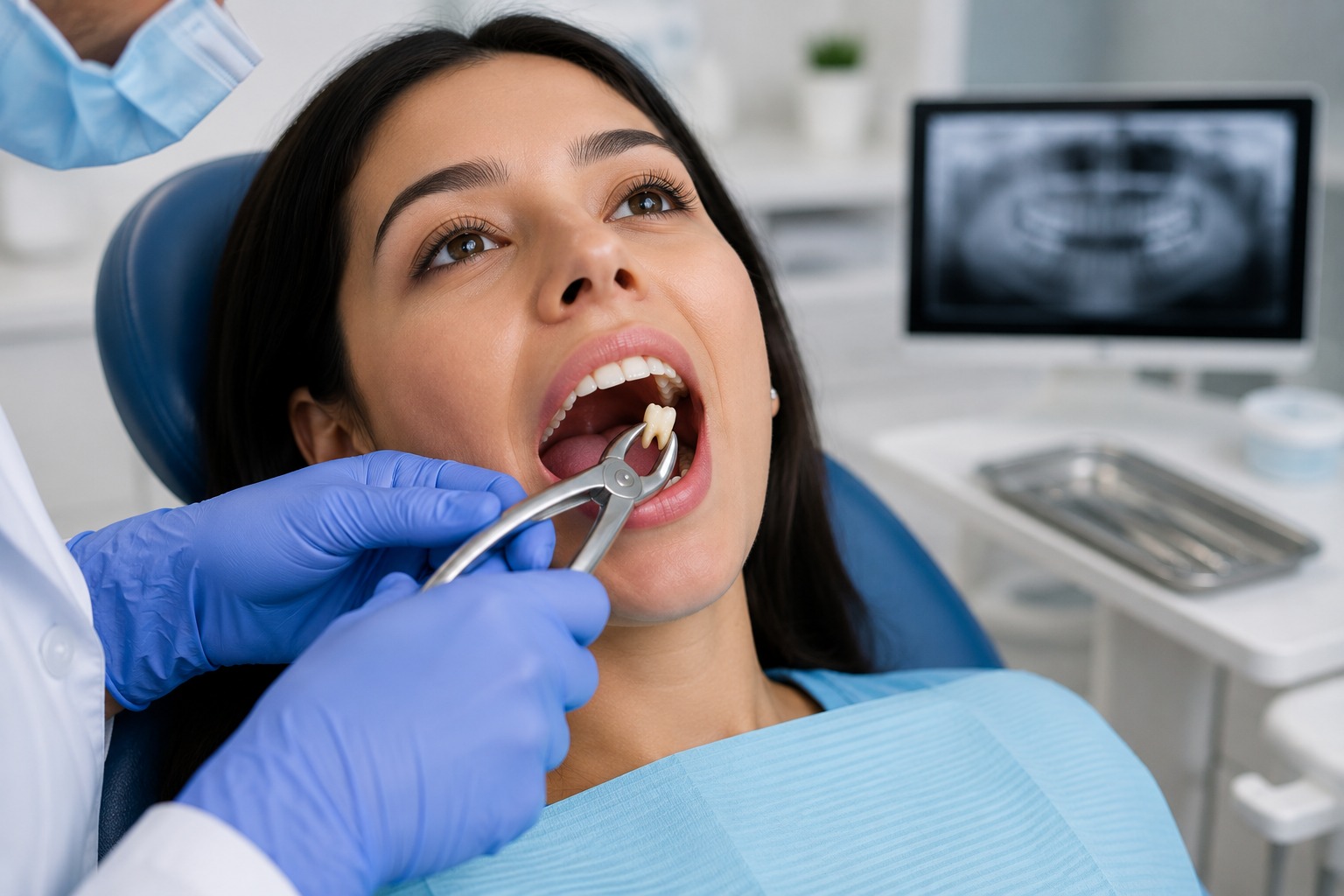
Understanding Tooth Extraction & Natural Preservation
Tooth extraction is a clinical dental procedure in which a tooth is gently removed from its socket within the alveolar bone. In modern clinical dentistry, preserving your natural teeth is always the primary objective. Natural teeth provide optimal chewing efficiency, maintain natural jawbone density, and keep neighbouring teeth aligned.
However, when a tooth is extensively damaged by decay, fractured beneath the gumline, or affected by severe infection that cannot be safely managed through restorative care, removing the tooth may be the most responsible decision to eliminate pain, protect surrounding bone, and prevent infection from spreading.
Importantly, experiencing tooth pain does not automatically mean that extraction is required. A clinical examination is essential to evaluate whether your natural tooth can be preserved through conservative treatments—such as tooth-coloured restorations or root canal therapy—with dental X-rays or other imaging recommended when clinically indicated to assess tooth roots, bone support, or impaction.
Preserve First
Natural teeth are prioritized; extraction is considered only when restorative options are clinically non-viable.
Careful Diagnostics
Thorough examination of teeth and gums, with diagnostic radiography recommended when clinically indicated.
Comfort & Safety
Effective local anaesthesia and gentle surgical techniques minimize tissue disruption and support smooth healing.
When Might a Tooth Extraction Be Recommended?
A dentist may recommend tooth removal only after confirming that conservative options cannot reliably preserve the tooth. Common clinical reasons include:
Extensive Tooth Decay
When dental caries has destroyed so much healthy tooth structure that a filling, onlay, or dental crown cannot be securely anchored.
Severe Tooth Fractures
Vertical root fractures or deep structural breaks extending well below the bone crest that cannot be restored.
Advanced Periodontal Disease
Severe gum infection leading to extensive loss of supporting alveolar bone and significant tooth mobility, where the tooth carries a poor long-term prognosis.
Orthodontic Spacing Needs
Selected teeth may occasionally be removed as part of comprehensive braces & orthodontic treatment to relieve severe dental crowding and achieve optimal bite alignment.
Problematic Impacted Teeth
Wisdom teeth or other teeth unable to emerge properly that cause recurrent localized infections, cysts, or damage to adjacent molars.
Failed Previous Treatments
Teeth with persistent apical infections or non-treatable root anatomy where endodontic retreatment or apical surgery is not viable.
Simple vs. Surgical Extractions: What Is the Difference?
Not all tooth extractions are performed in the same way. Depending on how accessible the tooth is and the condition of its root anatomy, your dentist will plan either a simple or surgical extraction:
Simple Dental Extraction
Recommended for teeth that are fully erupted above the gumline and can be accessed directly without surgical incising.
- Performed with local anaesthesia administered to numb the treatment area.
- The dentist gently expands the socket with specialized elevators and forceps.
- Minimal tissue disturbance, usually requiring no stitches.
Surgical Dental Extraction
Required when a tooth cannot be easily reached or removed through a standard approach due to position, breakage, or bone coverage.
- Used for impacted wisdom teeth, teeth broken at the gumline, or curved roots.
- May involve a small gum incision or sectioning the tooth for gentle removal.
- Small dissolving or removable sutures may be placed to support healing.
Wisdom Teeth & Impacted Molars
Wisdom teeth (also known as third molars) are the last permanent teeth to develop and typically emerge between the ages of 17 and 25. Because human jaws frequently have limited space remaining behind the second molars, wisdom teeth often emerge at unusual angles or become partially or completely trapped within the jawbone or gum tissue—a condition known as impaction.
Common Symptoms & Potential Complications:
Does every wisdom tooth need removal? No. Wisdom teeth that erupt into healthy alignment, function normally, and can be kept clean with daily brushing do not require extraction. Even with impacted teeth, removal is recommended only when clinical examination and diagnostic imaging identify active pathology, recurrent symptoms, or risk to adjacent structures.
Pre-Extraction Assessment & Medical Disclosures
Your overall medical health plays an important role in dental healing and surgical planning. Prior to an extraction, your medical history, current medications, clinical examination, and imaging are reviewed as appropriate to your individual case. It is essential that you inform your dentist about all medical conditions and therapies:
Blood-Thinning Medications
Medicines such as aspirin, clopidogrel, warfarin, or newer anticoagulants affect clot formation. Critical Safety: Never stop prescribed blood thinners independently; your dentist coordinates safely with your prescribing physician.
Bone-Modifying Medications
Oral or intravenous bisphosphonates (used for osteoporosis or bone conditions) require special assessment to prevent delayed bone healing or medication-related complications.
Cardiovascular & Blood Pressure
Hypertension, heart valve replacements, or previous cardiac interventions may require specific anaesthetic selections or preventive clinical protocols.
Diabetes & Healing Conditions
Blood sugar levels directly influence tissue recovery and infection defense. Managing blood glucose supports smooth socket healing.
What to Expect During the Extraction Procedure
Knowing what will occur during your appointment helps reduce apprehension. A standard extraction follows six organized clinical stages:
Clinical Confirmation & Review
Your dentist reviews the diagnostic X-ray, explains the procedure, and confirms that you feel comfortable to proceed.
Administering Local Anaesthesia
A local anaesthetic solution is gently placed near the tooth to block pain signals throughout the surrounding gum tissue and bone.
Verifying Complete Numbness
Before proceeding, your dentist checks the area to confirm the local anaesthetic is working effectively so that sharp sensations are managed.
Gentle Elevation & Removal
Using specialized dental instruments, the tooth is gently loosened within the socket. You will feel firm pressure and movement, but no sharp discomfort.
Haemostasis & Clot Formation
The socket is cleaned, and a sterile gauze pad is placed over the area. You will be asked to bite down firmly to allow a healthy blood clot to form.
Post-Operative Instructions
Your dentist explains exact aftercare guidelines and provides guidance for comfortable at-home recovery.
Post-Extraction Aftercare: First 24 Hours & Beyond
Proper aftercare supports healing, helps protect the developing blood clot, and reduces post-procedure discomfort. While you should always follow your treating dentist's specific instructions, general guidance typically includes:
The First 24 Hours (Critical Clot Protection)
- Gauze Pressure: Maintain gentle, steady pressure on the gauze pad for the timeframe advised by your dentist (commonly around 30–45 minutes) to aid clot formation.
- Rest with Head Elevated: Keep your head supported on pillows; avoid strenuous physical exertion or bending down.
- No Rinsing or Spitting: Avoid swishing liquid or forceful spitting, which can dislodge the fresh clot.
- Avoid Straws & Smoking: Negative oral suction and tobacco toxins significantly disrupt clot stability.
- Cold Compress: When advised, an external cold pack applied intermittently to the cheek can help minimize swelling during the initial hours.
Day 2 and Beyond (Gentle Healing)
- Warm Saltwater Rinses: From Day 2, gently bathe your mouth with warm saline (half teaspoon salt in warm water) after meals.
- Soft Food Diet: Eat cool or lukewarm soft foods like yoghurt, porridge, smoothies, and soups. Chew away from the site.
- Careful Oral Hygiene: Continue brushing and flossing your remaining teeth carefully, avoiding direct contact with the wound.
- Avoid Hard/Spicy Foods: Stay away from crunchy chips, nuts, seeds, or very hot/spicy foods that can lodge in the socket.
- Follow Dental Advice: Take any prescribed or recommended pain relief strictly as advised by your dentist.
Dry Socket (Alveolar Osteitis): Causes, Signs & Management
Following a tooth extraction, a dark red blood clot naturally forms inside the empty socket. This clot serves as a protective biological barrier, shielding the underlying jawbone and delicate nerve endings while new connective tissue forms.
What is Dry Socket? If this blood clot fails to develop properly, dissolves prematurely, or is physically dislodged, the bone walls become exposed to air, fluids, and food particles. This painful clinical condition is known as alveolar osteitis, or dry socket.
Common Triggers for Dry Socket
- Smoking or using tobacco products during early healing
- Drinking liquids through a straw (suction effect)
- Forceful spitting or aggressive mouth rinsing
- Disturbing the extraction site with the tongue or fingers
Recognizing Dry Socket Symptoms
- Throbbing pain starting 2–3 days after extraction
- Pain radiating towards the ear, temple, or neck
- Empty-looking socket with missing clot or visible bone
- Persistent foul taste or bad breath from the area
Replacing a Missing Tooth & Long-Term Oral Health
Unless an extracted tooth is a non-functional wisdom tooth or was removed for orthodontic space closure, leaving an empty gap can have long-term oral consequences over time:
Dental Implants
A titanium post placed in bone, restoring both tooth root and crown for excellent stability. Learn more about dental implants.
Dental Bridges
A fixed prosthetic unit anchored to adjacent crowns, effectively bridging the gap without removable parts.
Partial Dentures
Removable appliances that replace one or multiple teeth, providing a functional, non-surgical restorative choice.
When Should You Seek Prompt or Emergency Dental Help?
While mild swelling, mild bruising, and moderate tenderness are normal aspects of recovery, certain warning signs require prompt clinical evaluation:
Critical Emergency Warning
If post-extraction swelling spreads rapidly into your neck, submandibular area, or eye region, or if you experience a high fever accompanied by difficulty swallowing (dysphagia) or difficulty breathing, seek immediate emergency hospital medical evaluation without delay. These symptoms may indicate a spreading deep space infection that requires urgent care.
Tooth Extraction & Oral Surgery in Pathirippala, Palakkad
Complete Dental Clinic provides comprehensive, patient-centred dental care and gentle tooth removal in Pathirippala. Our clinic is dedicated to clear diagnostic communication, careful local anaesthesia, and personalized follow-up care for individuals and families across Palakkad district.
Conveniently situated at 1st Floor, Maimoon Square, opposite South Indian Bank, Pathirippala, Kerala 678642, we regularly assist patients from Pathirippala, Mankara, Parali, Ottapalam, and surrounding areas who require careful evaluation of broken teeth, impacted wisdom molars, or non-restorable decay.
Related Dental Services at Complete Dental Clinic
Tooth extraction connects with other essential restorative and preventive services:
Root Canal Treatment
Preserving infected natural teeth to avoid the need for extraction whenever clinically feasible.
Dental Implants
Long-term replacement of missing teeth to restore natural chewing power and prevent bone loss.
Digital Dental X-Ray
High-clarity imaging to assess root curvature, impaction depth, and proximity to nerves.
General Dentistry
Routine examinations, cavity fillings, and preventive checkups for long-term oral stability.
Frequently Asked Questions About Tooth Extraction
Helpful, clinically accurate answers to common patient questions regarding tooth removal:
When is tooth extraction necessary?
A dentist may recommend tooth extraction when a tooth is too severely decayed, fractured, or infected to be restored, when advanced gum disease compromises bone support, or as part of orthodontic treatment. Extraction is always considered after evaluating whether the natural tooth can be preserved through root canal therapy or other restorative procedures.
Is tooth extraction painful?
The extraction area is thoroughly numbed with local anaesthesia prior to the procedure so you should not feel sharp pain. While the tooth is being elevated, you may feel firm pressure or movement sensations. Following treatment, mild to moderate tenderness is normal as the anaesthetic wears off and can be managed with aftercare and recommended pain relief.
What is the difference between simple and surgical extraction?
A simple extraction is performed on a tooth that is fully erupted and clearly visible above the gumline, using dental elevators and forceps to gently loosen and remove it. A surgical extraction is required when a tooth is broken at or below the gumline, has severely curved or anchored roots, or remains impacted in bone, requiring minor surgical access.
When might wisdom teeth need removal?
Wisdom teeth (third molars) may need extraction if they are impacted, partially erupted, causing repeated gum infections (pericoronitis), damaging neighbouring second molars, or contributing to localized pain or cysts. However, healthy wisdom teeth that erupt in good alignment and can be kept clean do not automatically require removal.
What should I avoid after tooth extraction?
For at least the first 24 hours, avoid vigorous rinsing, forceful spitting, drinking through straws, smoking or tobacco products, and strenuous physical activity. These actions create suction or elevated blood pressure that can dislodge the forming blood clot, delaying healing and increasing the risk of dry socket.
What is dry socket?
Dry socket (alveolar osteitis) occurs when the protective blood clot in the extraction socket dislodges or dissolves prematurely, exposing the underlying bone and nerve endings. It typically causes severe, throbbing pain radiating to the ear or jaw two to three days after extraction. If you suspect dry socket, contact your dentist for clinical assessment and soothing medicated dressing.
When can I eat normally after extraction?
During the initial 24 to 48 hours, stick to soft, cool or lukewarm foods such as porridge, yoghurt, mashed vegetables, and smooth soups. Avoid hot, spicy, crunchy, seeded, or hard foods that could irritate the socket, and chew on the opposite side of your mouth. You can gradually reintroduce firmer foods as healing progresses and comfort permits.
When should I seek urgent help after extraction?
You should contact your dentist promptly if you experience bleeding that does not subside after biting firmly on gauze for 30 to 45 minutes, worsening pain or swelling after several days, or signs of infection such as fever. If oral swelling spreads rapidly to the neck or eye area, or is accompanied by high fever, difficulty swallowing, or trouble breathing, seek emergency hospital medical evaluation immediately.
Need a Tooth Extraction Consultation?
If you have a damaged, painful, or problematic tooth, contact Complete Dental Clinic in Pathirippala to schedule a careful clinical assessment and discuss your options.